Industry
Automated warehouses
Client
Leadership
CFC Reporting Re:Imagined
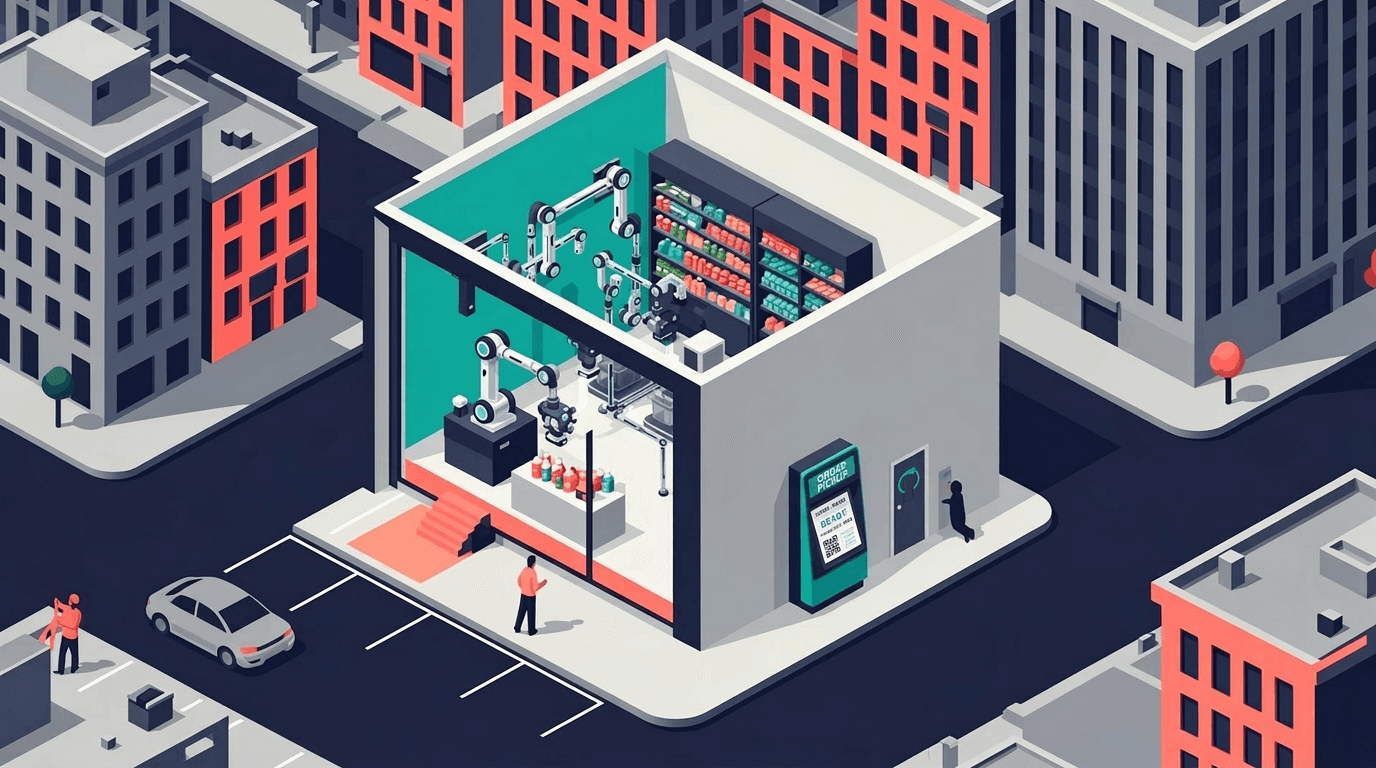
The smallest store in Ocado's network. The most complex design challenge. Built from scratch across hardware, software, and everything in between - mapped on foot, from 0 to hero with AI, shipped in under a month.
The CFC is Ocado's flagship. Large, automated, optimised over years. Store Based Automation or as called for short SBA was different - a compact unit next to offices, universities, high streets, run by a small team, sometimes just two people on a weekend. The customer wasn't at the end of a delivery van. They were standing twenty metres away, waiting. There was no existing product to redesign. The Customer Collection Point had never been built. Neither had the management layer for someone like Doris, running her first automated store. The brief: design the full SBA experience - customer-facing hardware and software, operational tools, and the design principles to hold it all together.
Led UX end-to-end as Principal Designer - from shaping the proposition with Product, Engineering, Marketing, and Propositions leadership through to hands-on design, validation, and handoff. Built and managed the UX team across the different parts of the solution, and worked directly on the Customer Collection Point - multi-week on-site sessions in Hatfield, co-designing the physical and digital customer flow, leading user testing across hardware and software, and running the accessibility evaluation working group. First time Ocado had designed operational tooling at this scale and operator profile. Also introduced CSAT measurement to an Ocado hardware product for the first time.
SBA wasn't a new product built in isolation - it was Ocado's entire technology platform compressed into a fraction of the footprint. In a large CFC, each system has its own team, its own roadmap. In SBA, they had to work together flawlessly - at small scale, in a dense space, with a customer standing twenty metres from the back wall. The SBA manager made it harder. Not a warehouse veteran - possibly someone with no operational experience at all. The management tools couldn't be a stripped-down CFC layer. The mental model, the scale, and the decisions required were fundamentally different.
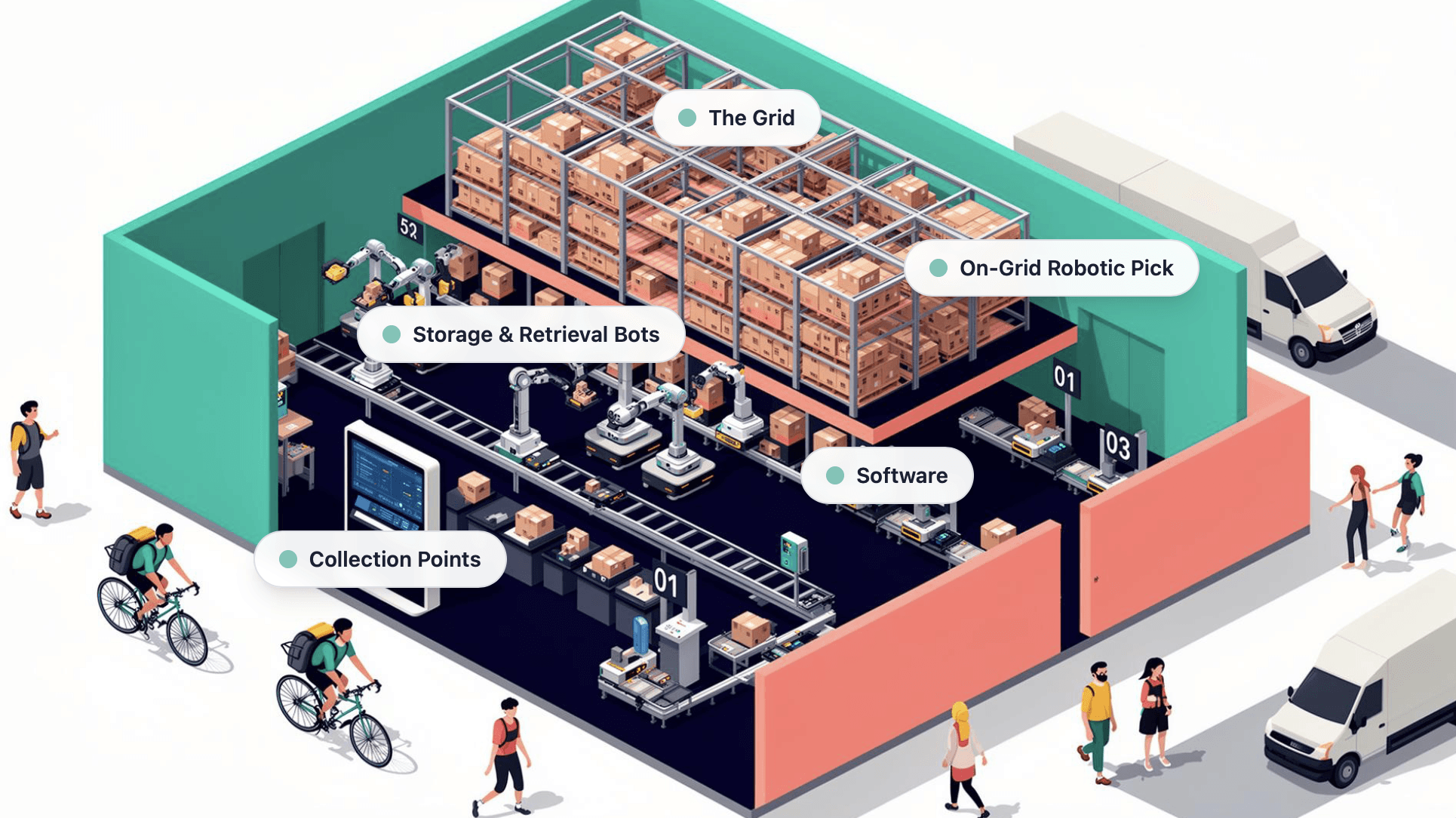
Image courtesy of Ocado Technology.
Started with the customer flow - literally. On-site in Hatfield for weeks, walking the physical journey from car park to collection point and back. Testing scenarios: someone with a pram, someone in a wheelchair, someone collecting a large order, someone in a hurry. The hardware and software decisions were entangled - you couldn't design the screen without knowing where the customer would be standing, what they'd have in their hands, what the lighting conditions would be. Accessibility became a design driver from the start, not a compliance check at the end. Set up and led a working group bringing together hardware engineers, software engineers, product leadership, procurement, and legal - all working off the same ADA and EU Accessibility Act requirements. On the management tools side, the framing from CFC Re:Imagined applied here too - from data to signal, from reporting to decision support. But taken further. If everything is working, the SBA manager shouldn't need to look at anything. If something needs their attention, it should be impossible to miss. The vision: one page. Not twelve, not five - one. Gamified where it helped. Designed for someone who'd never run a fulfilment operation before, because that's who would be running it.
Ocado launched its first ever end-user facing automated solution with a customer collection experience designed end-to-end: physical customer flow, digital interface, accessibility validation across both hardware and software, and efficiency testing across real-world collection scenarios. The management layer set a new baseline for what Ocado expected from its operational tooling at this scale. The one-page approach - the most stripped-back management interface in Ocado's product history - reflected a genuine rethinking of what it means to support a manager whose primary job is staying out of the way of a system that mostly runs itself. CSAT measurement was introduced to the SBA hardware product for the first time - giving the manager layer visibility into how the customer experience was tracking, and giving Ocado a feedback signal it had never had from this type of deployment. The tiered model - SBA as beginner, ISF as intermediate, CFC as expert - gave the organisation a shared framework for talking about operator experience across the whole fulfilment network. That conversation had never existed at that level before.
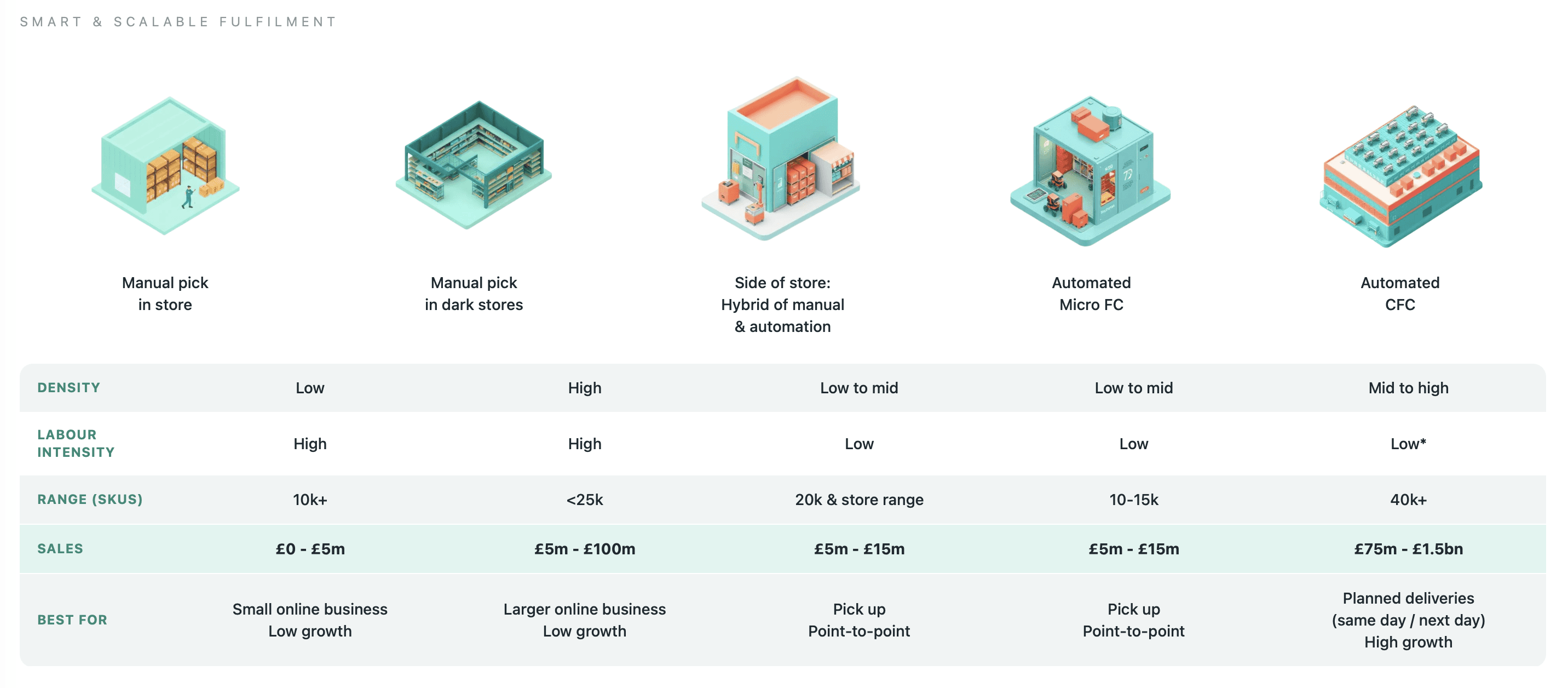
Ocado launched its first ever end-user facing automated solution with a customer collection experience designed end-to-end - physical flow, digital interface, accessibility validation across hardware and software, efficiency testing across real-world scenarios. The one-page management layer set a new baseline for what Ocado expected from operational tooling at this scale - the most stripped-back management interface in Ocado's product history, and a genuine rethinking of what it means to support a manager whose primary job is staying out of the way of a system that mostly runs itself. CSAT measurement introduced to an Ocado hardware product for the first time - giving the manager layer visibility into how the customer experience was tracking, and giving Ocado a feedback signal it had never had from this type of deployment. The tiered model - SBA as beginner, ISF as intermediate, CFC as expert - gave the organisation a shared framework for talking about operator experience across the whole fulfilment network. That conversation had never existed at that level before.
One of the most valuable things we did was also the most analogue. Taking a cue from the way McDonald's maps every physical process in a restaurant - literally walking the space, timing each moment, marking every decision point - we ran a three-day in-person workshop mapping the full customer collection journey from the outside in. Not just the software. Everything. Street signage. Car park entrance. Pre-arrival notifications. How you park, collect, and get a week's worth of groceries back to your car without dropping anything. Hardware engineers, software engineers, product leadership, industrial designers, operations, procurement, legal - all walking the same journey, calling out friction, flagging assumptions, arguing about what mattered. We left with agreed metrics, identified blockers, and - maybe most importantly - a room full of people who had stopped talking past each other.
The title borrows from Jean Jacoby's 1924 painting - the final push before the finish line. Replace the athletes with groceries and you've got the brief.
Principal UX Designer - end-to-end lead, team lead, hands-on design, accessibility lead
UX, service design, hardware UX, physical journey mapping, accessibility (ADA + EU), AI-assisted design, facilitation
Ocado's first end-user facing automated hardware solution